UX Design
Rocketlane TV - Building a Video Content Platform for Customer Success Teams
Overview
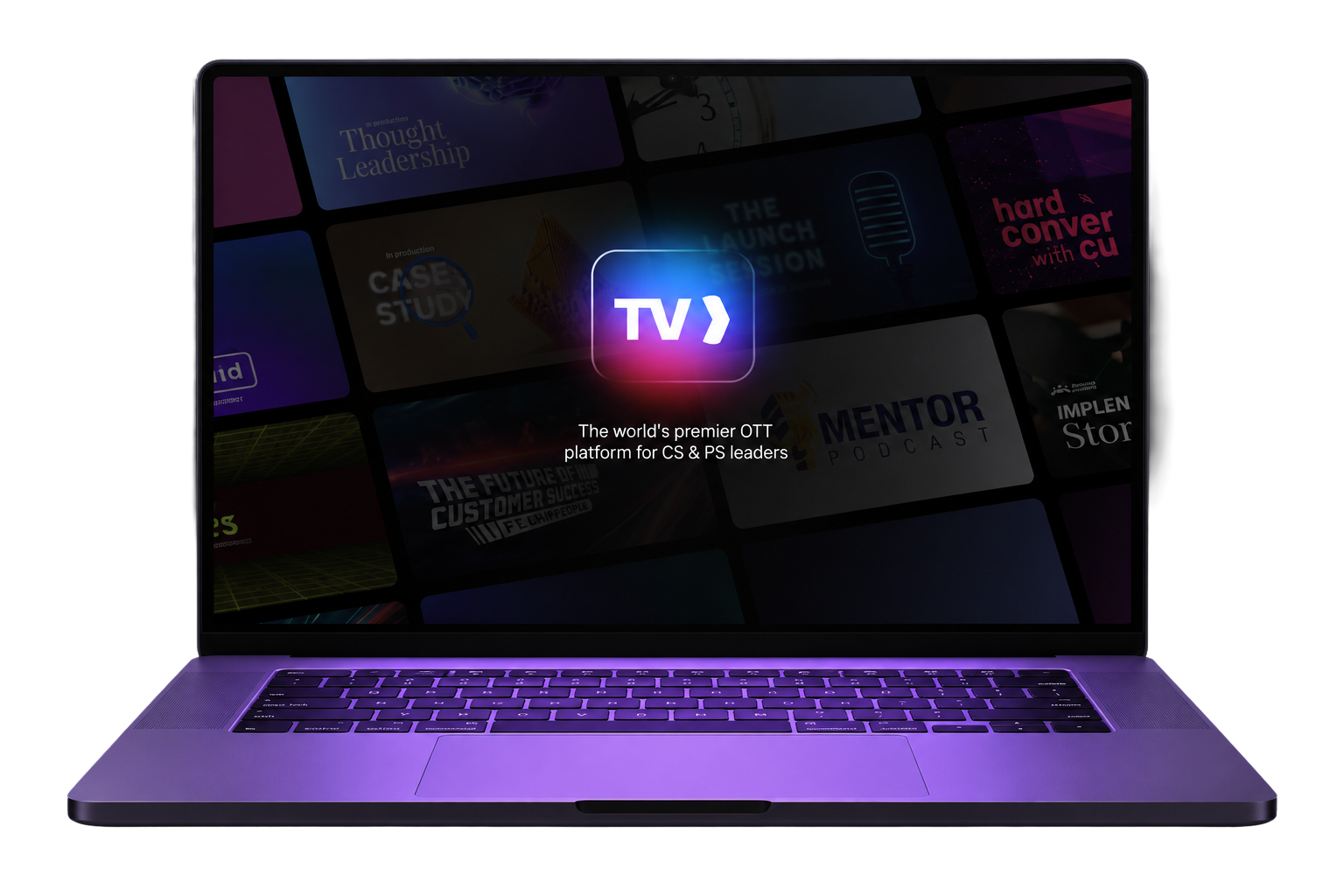
About Rocketlane TV aka RLTV
Rocketlane makes software that helps other companies onboard their customers. Alongside that product, the team had been producing a steady stream of video content — podcasts, webinars, community discussions — aimed at Customer Success (CS) and Professional Services (PS) leaders, the audience Rocketlane sells to.
Link to the siteResponsibilities
The solo product designer and project lead
- Org
- Rocketlane
- Year
- 2024 (3 months)
- Role
- Project Lead
Product Designer
Product Manager - Team
- Fastpix (Dev team)
Rocketlane Design Managers
Rocketlane Marketing Team
Here’s a short promo to understand RLTV better
The problem
Abundant Video Content, Scattered Sources
Rocketlane was producing real thought-leadership content for Customer Success and Professional Services demographic, but had no single, ownable place to show it off. We wanted to give the viewers an immersive experience while watching our huge library of video content.
The solution
One single accessible source for all things video
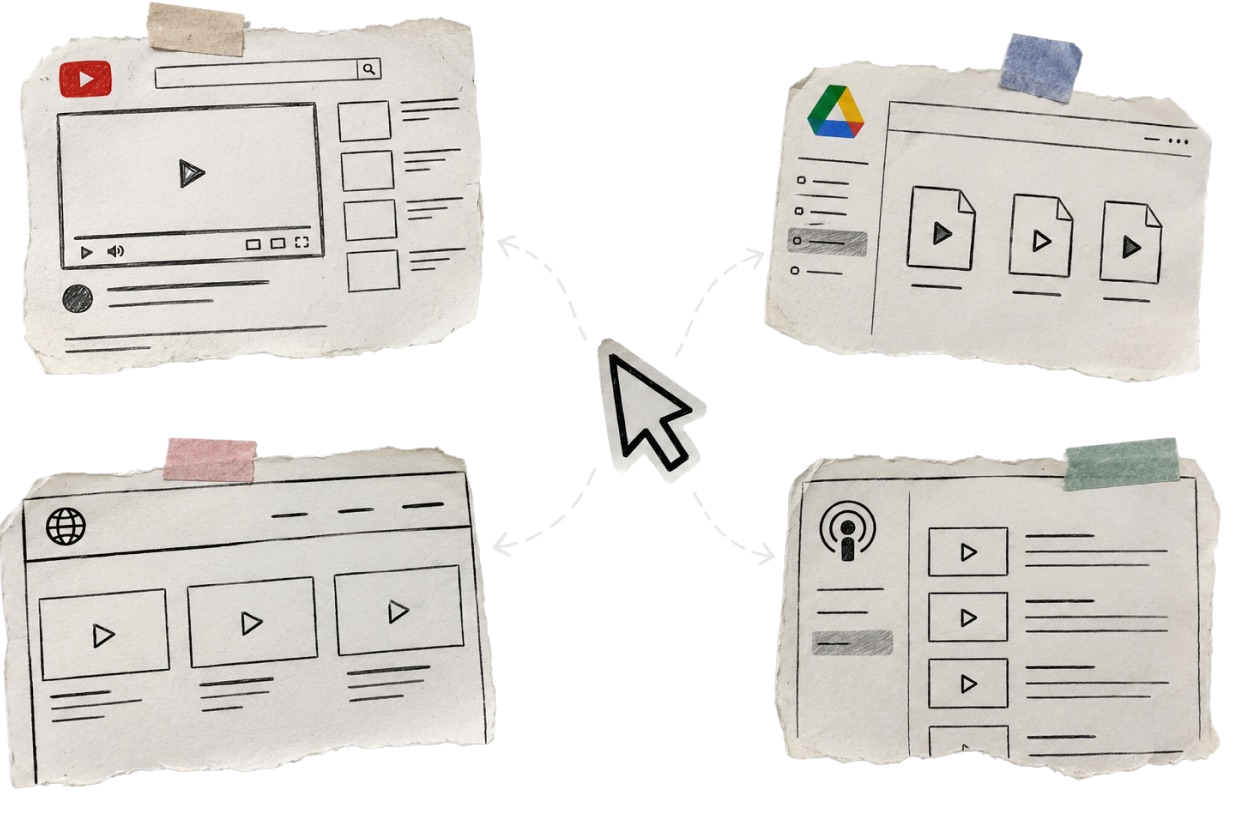
Pretty easy solution, right? Not exactly. We considered a lot of different options before landing on our final solution.
-

Has a good reach.
Hinders lead generation by distracting viewers to other recommendations
-

Worked initially while hosting webinars
No customization and didn’t scale to a large video library
-

Perfect platform
Had a 4–5 month waitlist. Didn’t fit the timeline
As you can see none of the above platforms were catering to the level of ambition we had with our video curation. That’s when we figured, we could build a video streaming platform ourselves.
Early validation
Quick Prototyping with Webflow
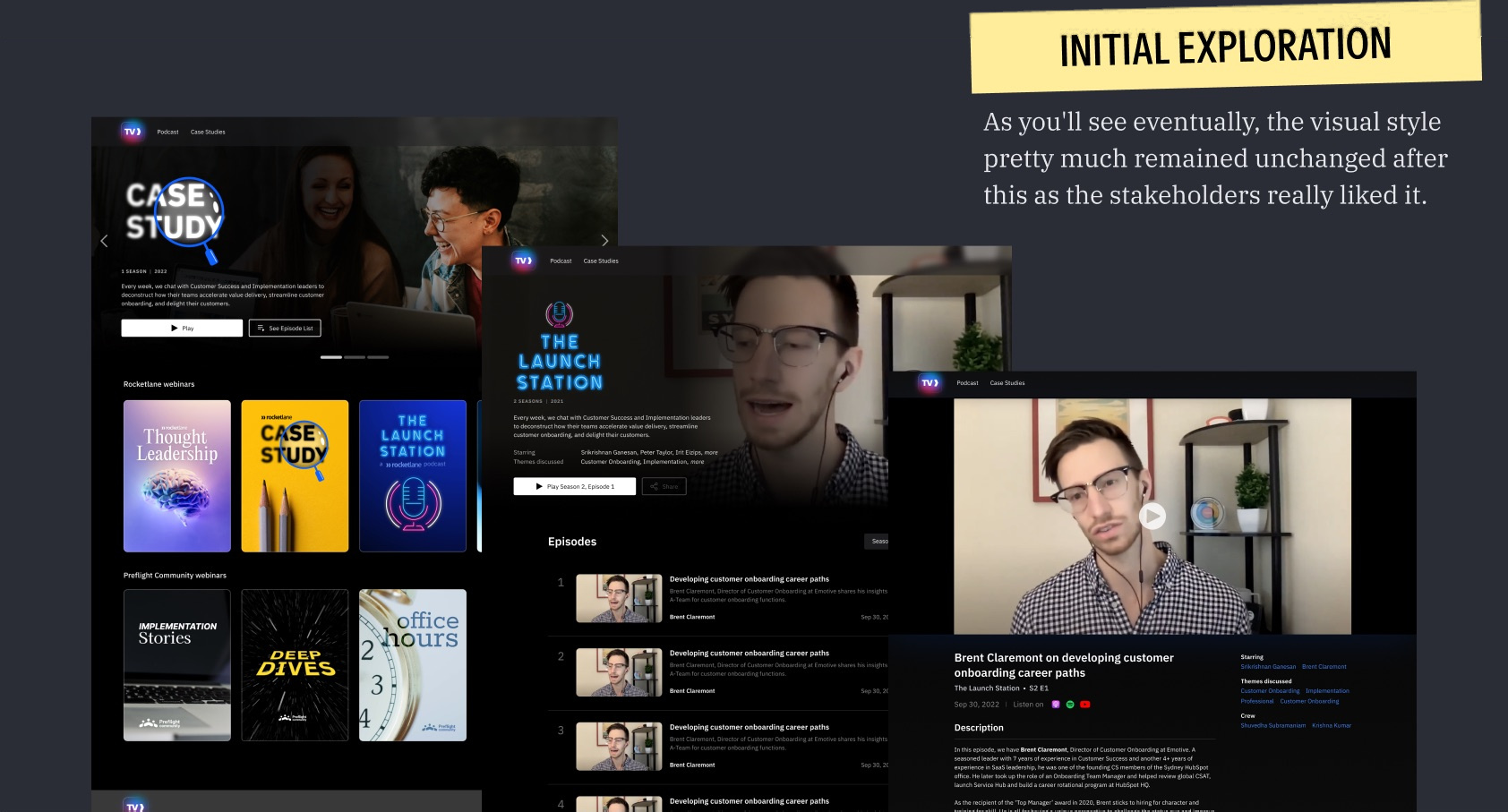
Inspired by OTT Platforms like Netflix, the goal was a platform that looked polished, was easy to navigate, and showcased the video library well.
With Webflow development, I was able to validate the design and style with stakeholders. But once its technical limits were clear, we partnered with Fastpix, a startup that specializes in building OTT platforms from the ground up for a customer’s specific use case, to build something that could actually scale.
Core flows
Designing the core flows
The design process involved carefully mapping out page structures and user flows, drawing inspiration from successful OTT platforms (Netflix, Apple TV+, Hotstar).
I designed multiple screens to improve discoverability across our extensive video library, including mobile web support for a better on-the-go experience.
For this case study, I’ll focus on the core flows:
- Onboarding
- Discovering and watching an episode
- Discovering Creators
Core flow #1
Onboarding a first-time user
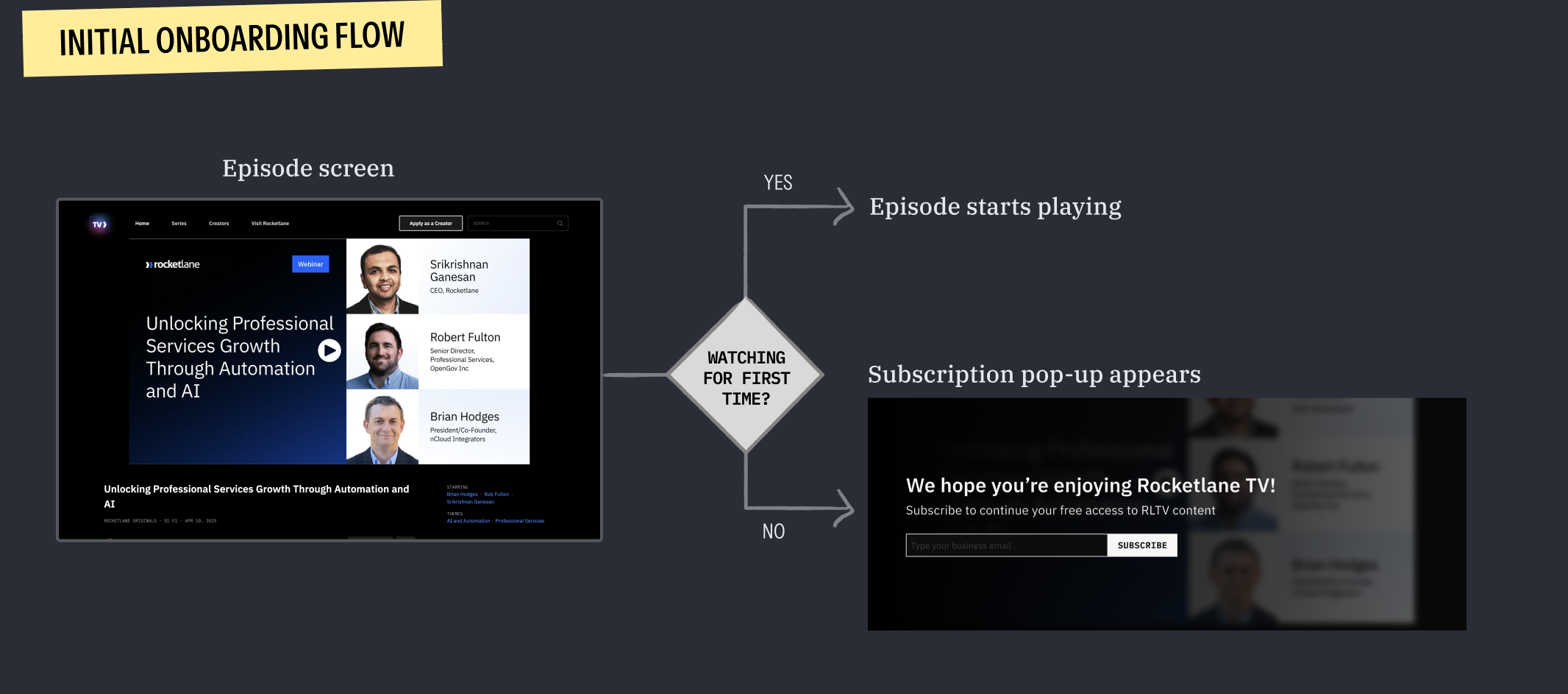
We knew our business needs with Rocketlane TV was to generate user leads by asking the visitors to subscribe to our platform.
And since this concept of OTT platform for B2B market is fairly nascent, I wanted to remove friction as much as possible during onboarding stage itself.
Initial plan
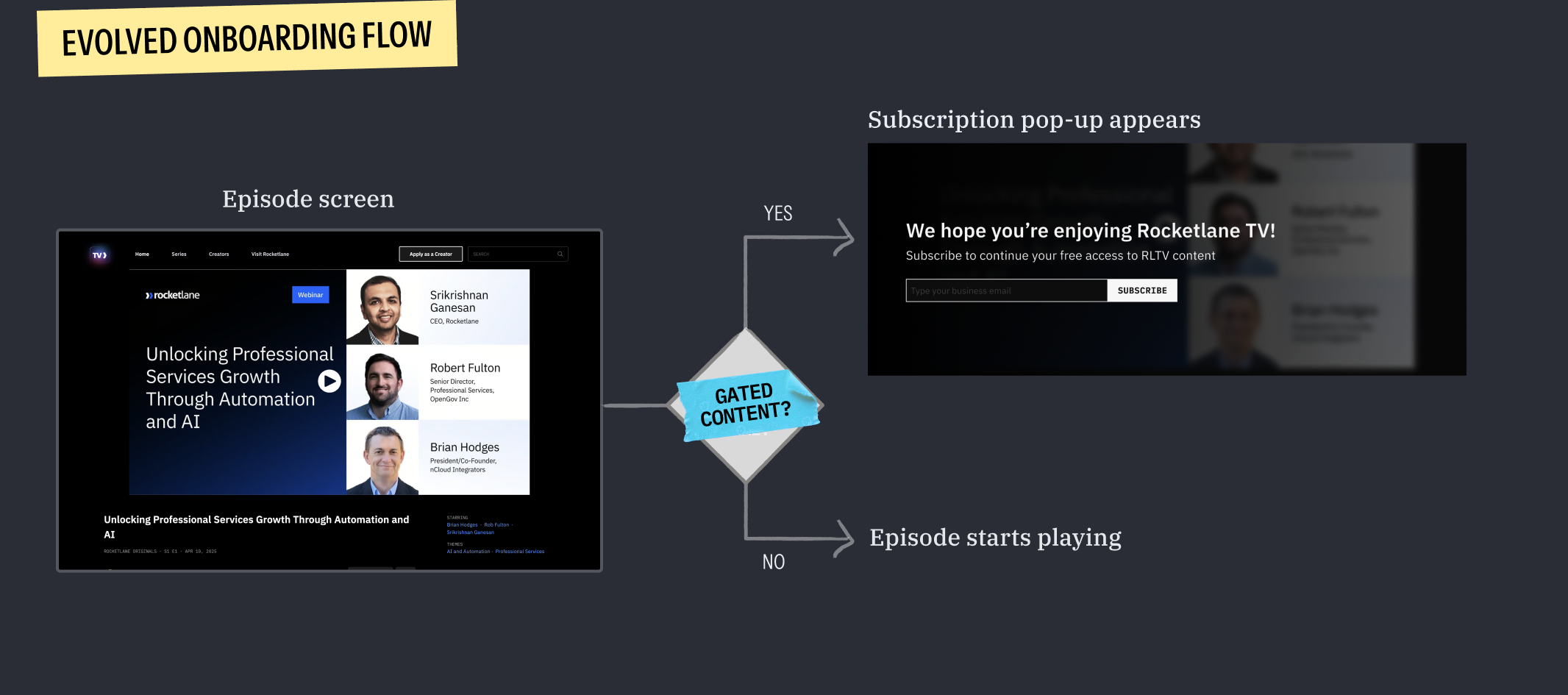
No subscription prompt on the first video; show it on a repeat view, second video, or first like attempt.
Feedback: Marketing said this lost us valuable leads on high-intent webinars.
What changed
A CMS feature that lets us mark any series Gated (email required from first view for high-intent content) or Ungated (no email required). The decision moved from platform-wide to per-series.
Core flow #2
Discovering and watching an episode
- Homepage
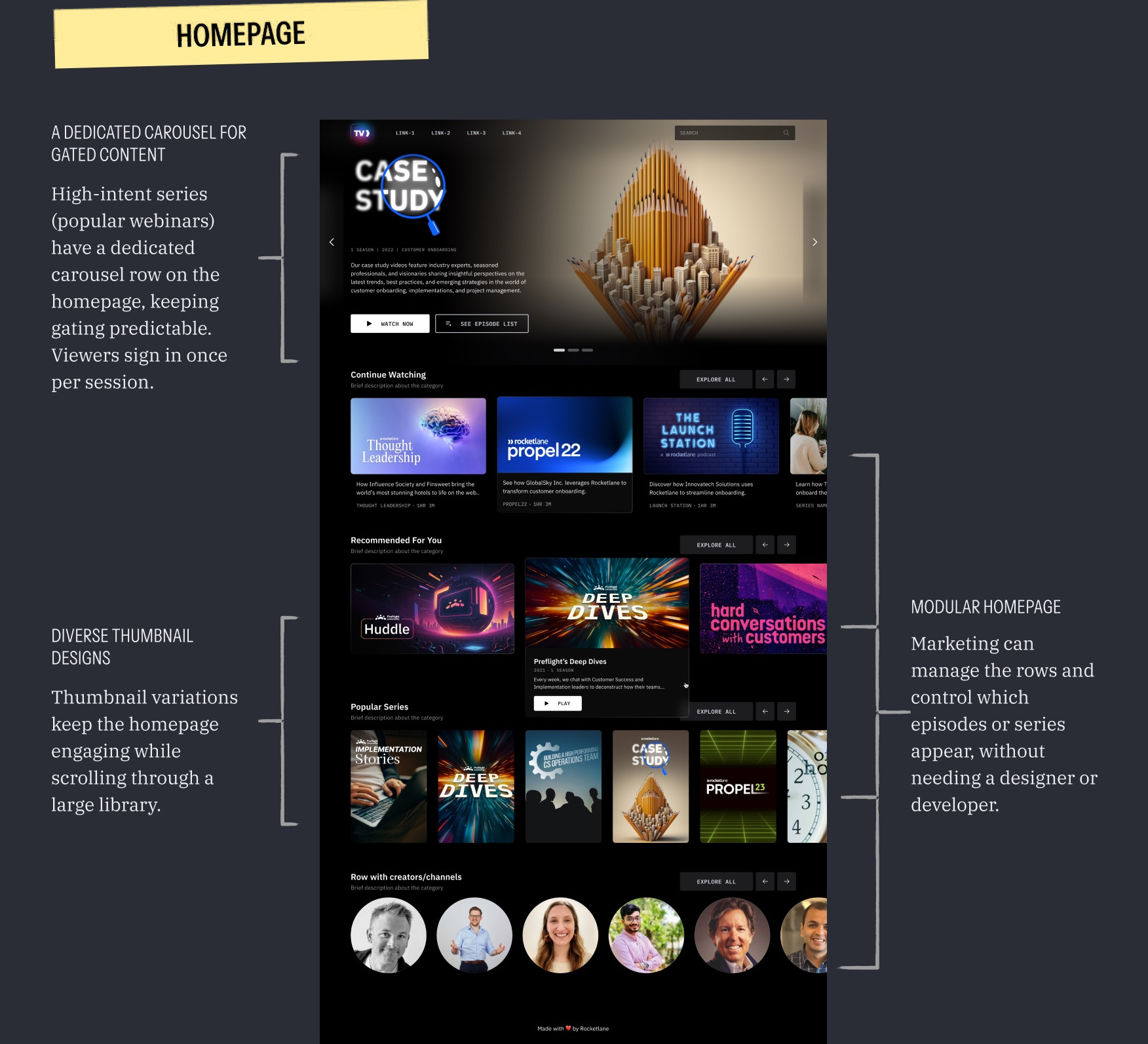
The homepage’s job is to get a visitor to click a thumbnail and start watching. With 150+ videos across 5–6 series, it’s easy to feel unsure where to begin. The design solutions below help grab viewers’ attention and keep the homepage delightful to browse while they scroll through a big library.
- Series page
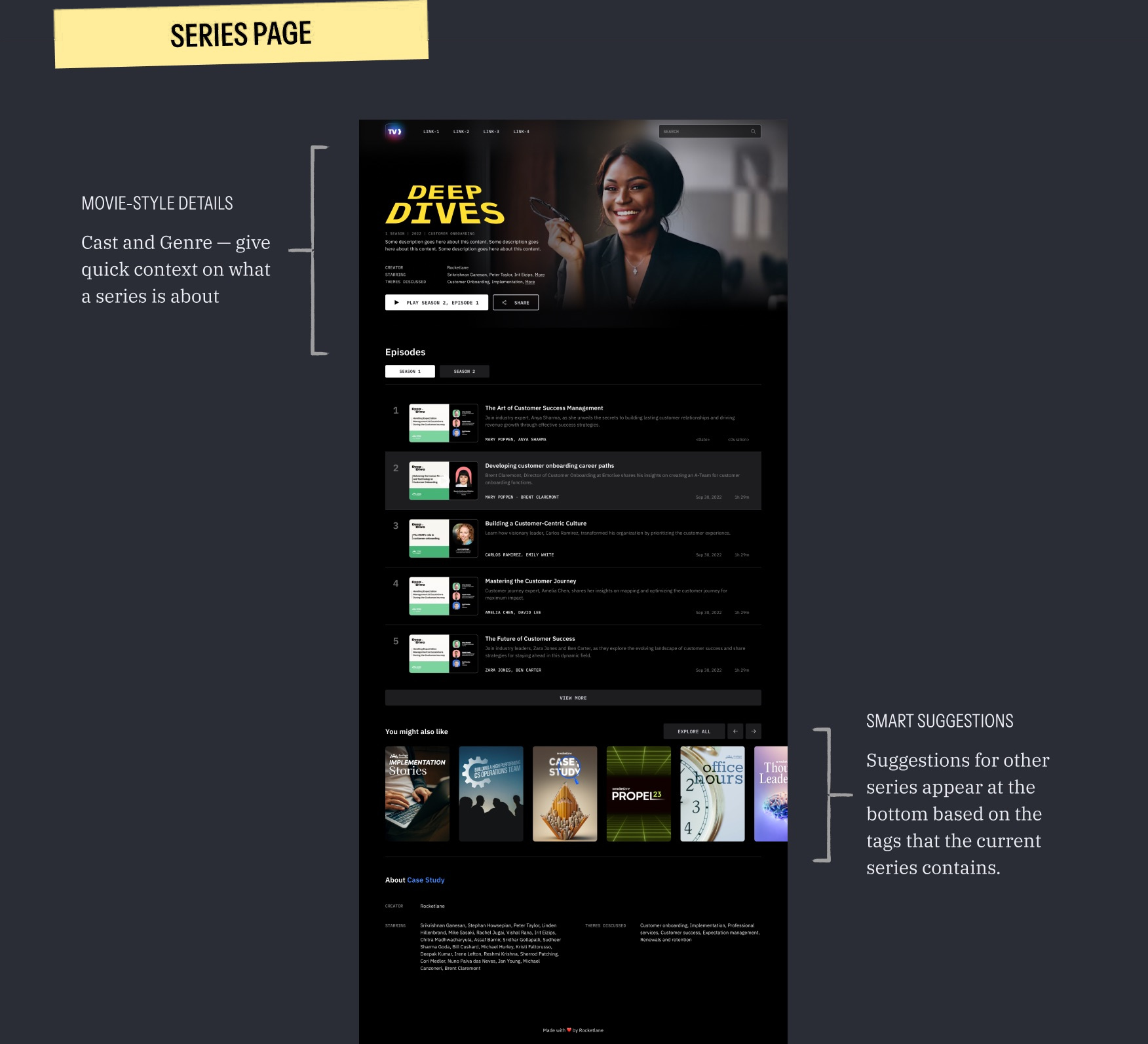
The series page uses movie-style Cast and Genre details with related-series suggestions.
- Episode page
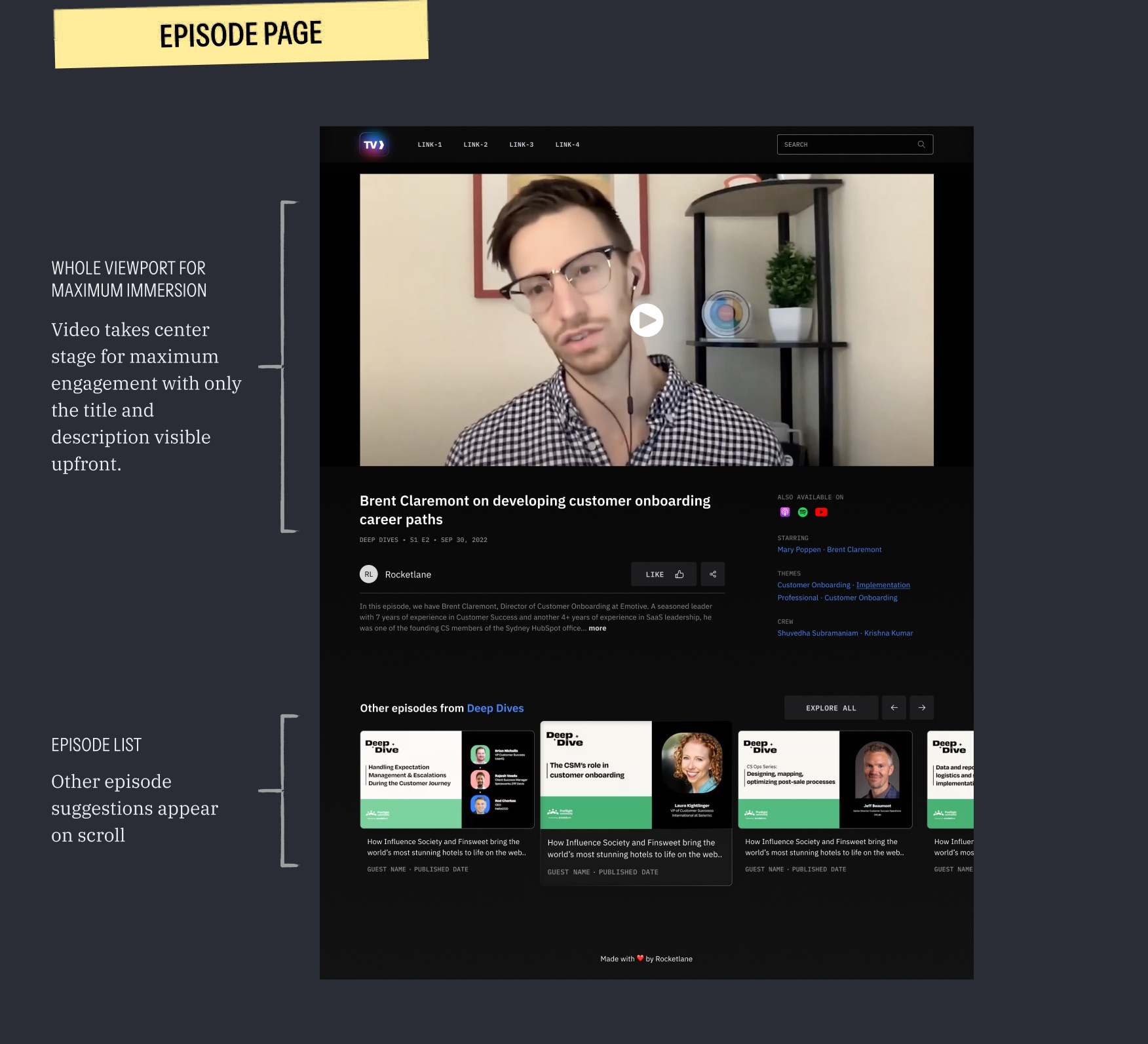
The episode page centers the video with only title and description upfront, with suggestions on scroll.
Dev handoff
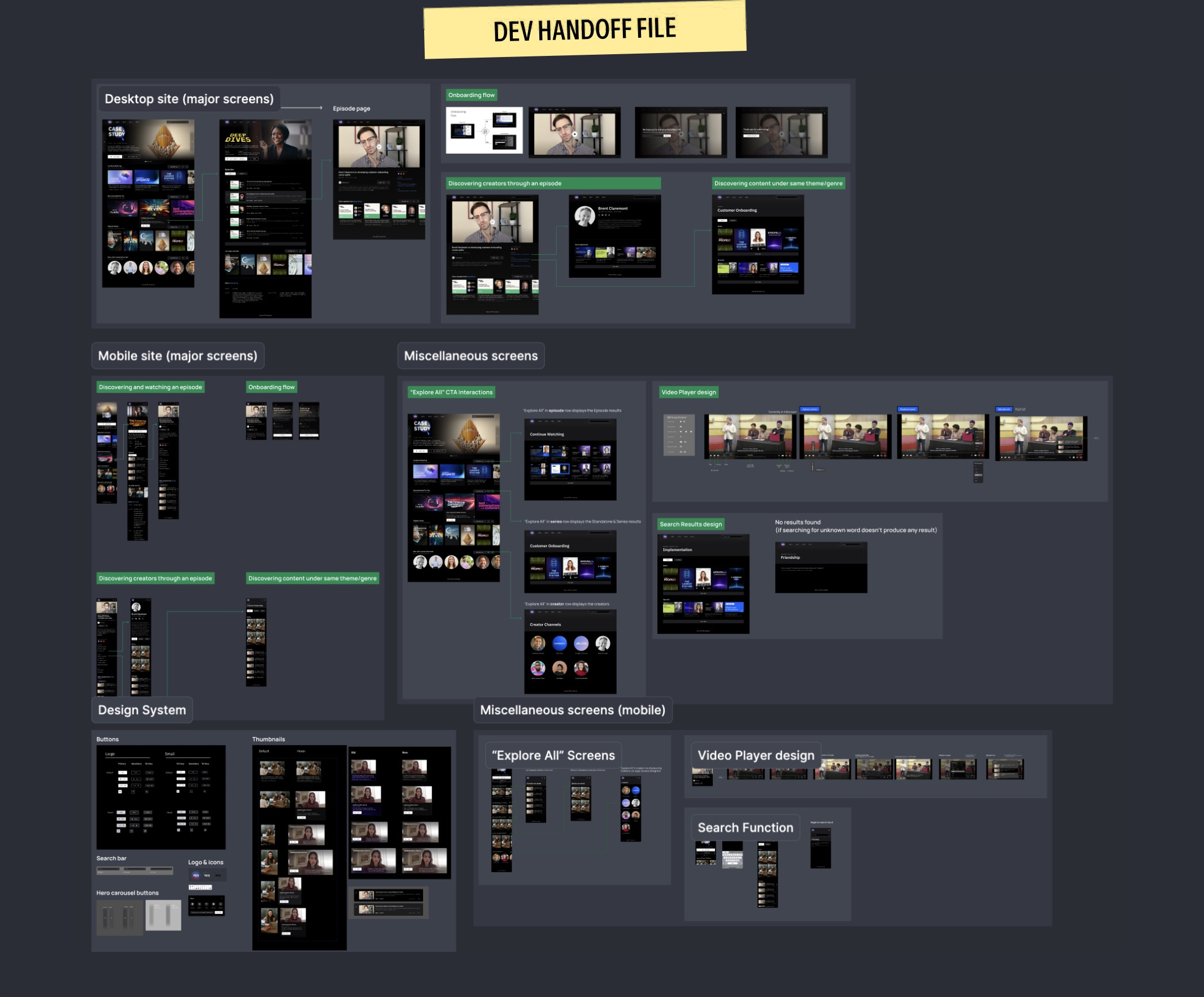
Page-by-page handoff to Fastpix
The handoff was delivered page by page in Figma with a component spec, homepage first, early description of remaining pages, and explicit modular/scalable areas. Post-launch fixes included slow sign-in loading optimized through HubSpot and a full responsive pass across breakpoints.
Validation
What the numbers showed after launch
Since launch: 4.6K+ unique visitors, 13.5K+ pageviews, 2m 28s average session, 2.49 views per visit, measured roughly six months post-launch in the CMS analytics dashboard.
- Unique visitors
- 4.6K+
- Pageviews
- 13.5K+
- Avg session
- 2m 28s
- Views / visit
- 2.49
Learnings
End note
The biggest lesson was the importance of validating technical feasibility early on in the process. The initial reliance on Webflow, while helpful for rapid prototyping, ultimately led to a costly shift towards a different platform.
This experience reinforced the importance of close collaboration between designers and developers from the initial stages of the project.